(W)HOLE

(W)HOLE. Infrastructure make worlds is a public artwork by Clusterduck exploring the hidden world of digital infrastructures. Developed for the art in the public space program of the city of Zurich, it takes the form of a journey across six brass manhole covers, each opening a gateway into an augmented reality world.

Earth, Cloud, City, Address, Interface and User are the six realms through which the project explores the systems shaping our digital lives, looking at both their extractive logic and their potential for cooperation.

Combining sculpture, photogrammetry, 3D design, video and AR, the project invites citizens to explore parallel realities, decode symbolic allegories and contribute their own stories, ideas and tools to a collective online archive.
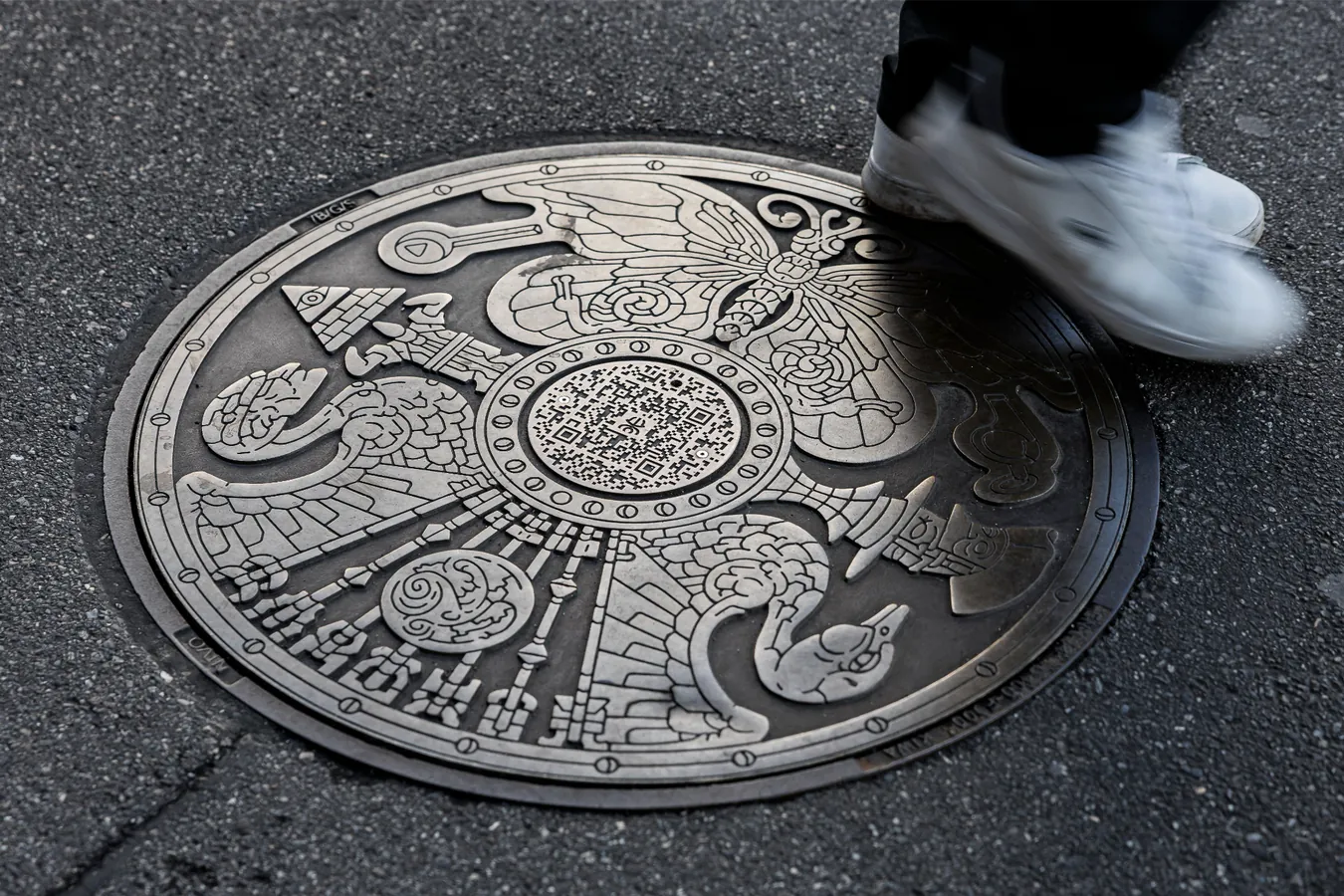
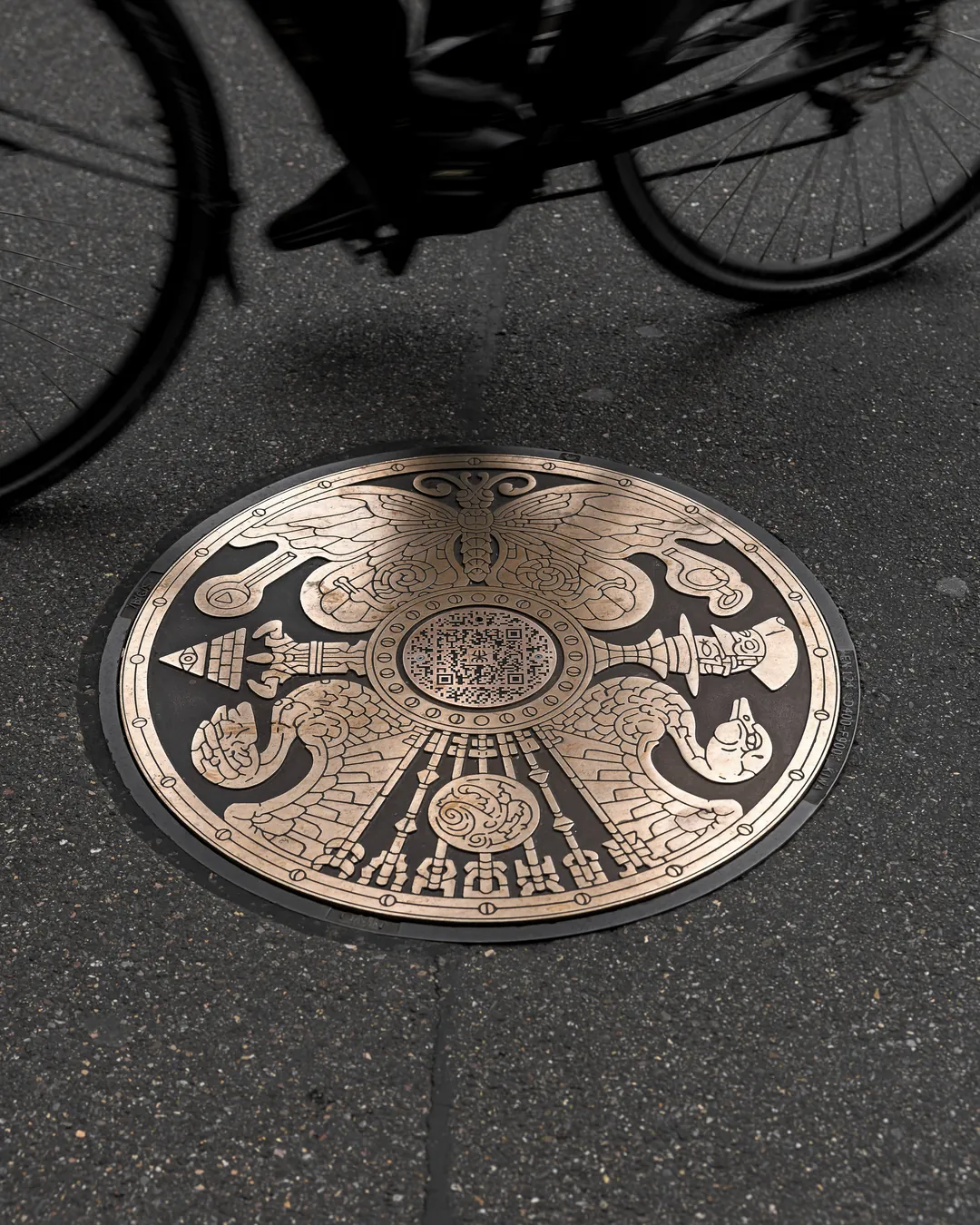
Oxidised brass manhole cover, engraved with an allegorical representation. On one side, courtesy of KiöR. The digital atlas offers further insight into the ideas behind these symbolic representations:“The internet might seem like a public space, but the protocols that structure it are decided by a handful of institutions and individuals, with no regard for transparency or accountability. Meanwhile, individuals and grassroots organisations keep fighting for their right to privacy and anonymity, despite increasing opposition from governments and private companies.”
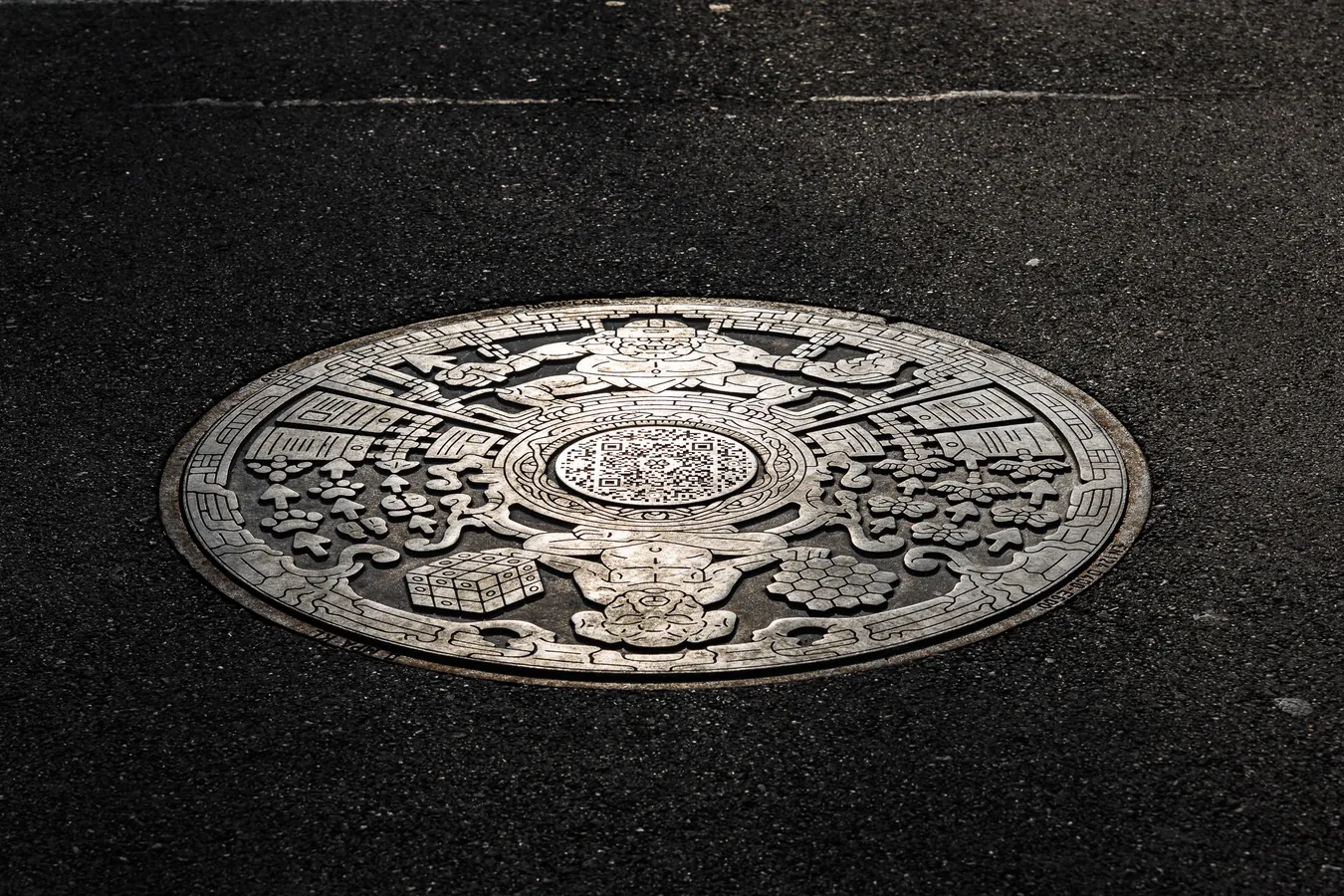
Oxidised brass manhole cover, engraved with an allegorical representation. On one side, courtesy of KiöR. The digital atlas offers further insight into the ideas behind these symbolic representations:

“The internet might seem like a public space, but the protocols that structure it are decided by a handful of institutions and individuals, with no regard for transparency or accountability. Meanwhile, individuals and grassroots organisations keep fighting for their right to privacy and anonymity, despite increasing opposition from governments and private companies.”
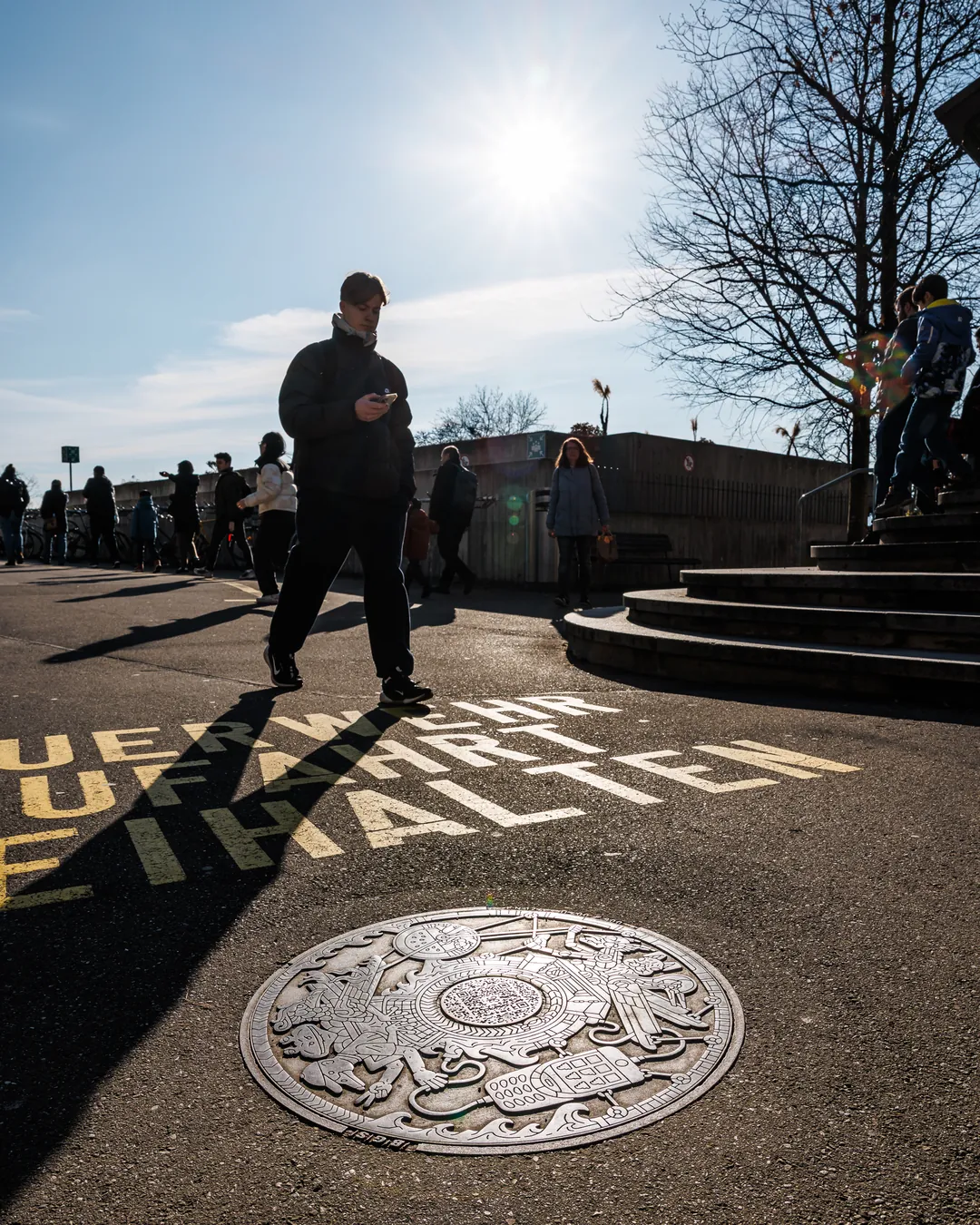
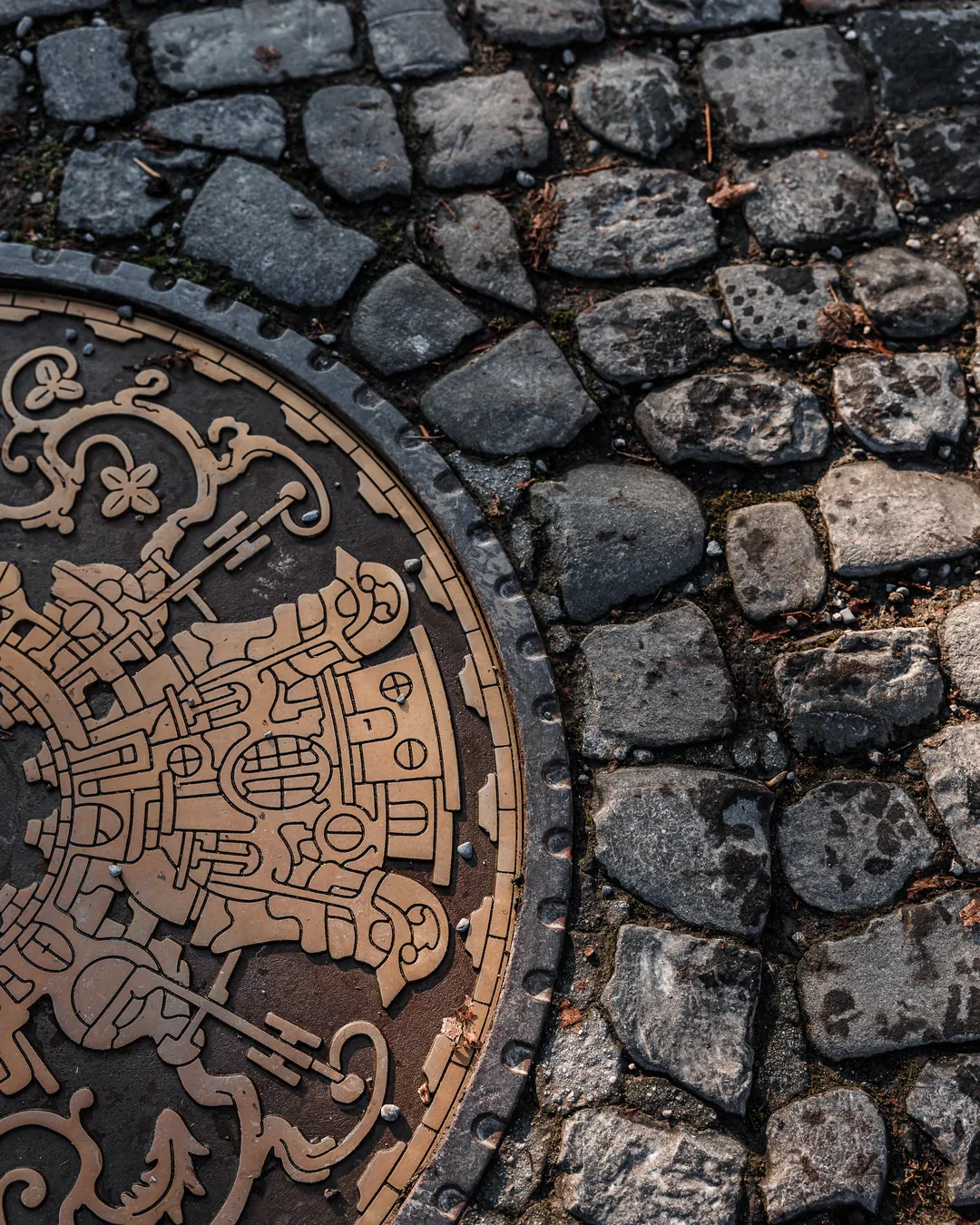
USER, the brass manhole cover located at Helvetiaplatz, at the heart of Zurich's nightlife. Each manhole cover is placed in a location that connects to the realm it represents. Courtesy of Kiör.
INTERFACE, the brass manhole cover at Polyterrasse, overlooking ETH Zurich, where many of the technologies behind our digital interfaces are studied and developed. Courtesy of Kiör.
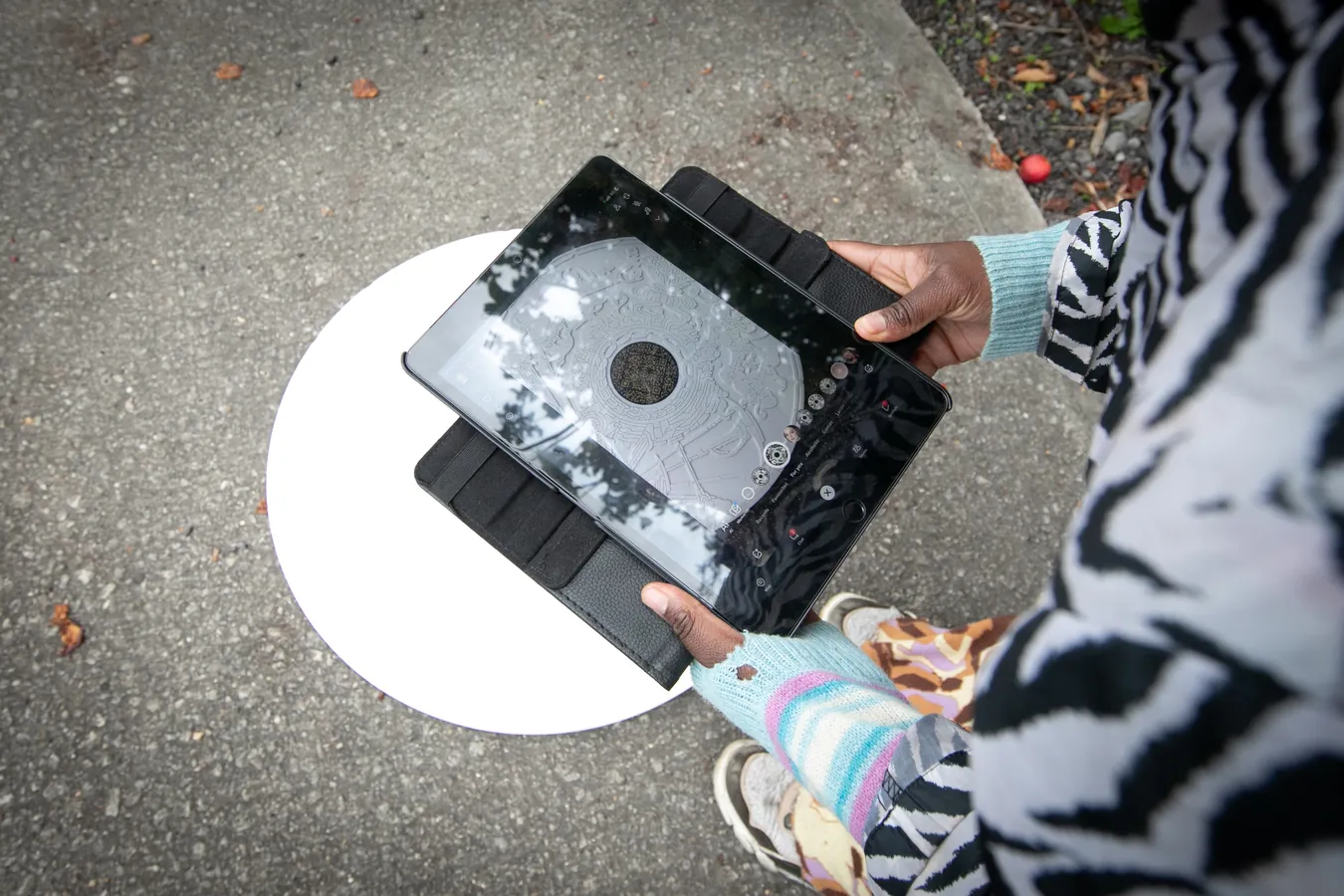
ADDRESS, freshly polished brass manhole cover, Paradeplatz, the city's financial hub. Each cover features a QR code that opens a gateway into its own augmented reality world. Courtesy of Kiör.
CITY, detail, Lindenhof, one of Zurich's oldest and most central public squares. The allegorical symbols featured on the manhole covers are decoded and explained on the project website. Courtesy of Kiör.
One of the six augmented reality worlds, dedicated to ADDRESS: the realm that determines who can be found, identified or excluded, and defines the invisible pathways governing digital infrastructures. Each world is built as a patchwork of photogrammetric scans of objects and places around the city, combined with a digital sculpture.
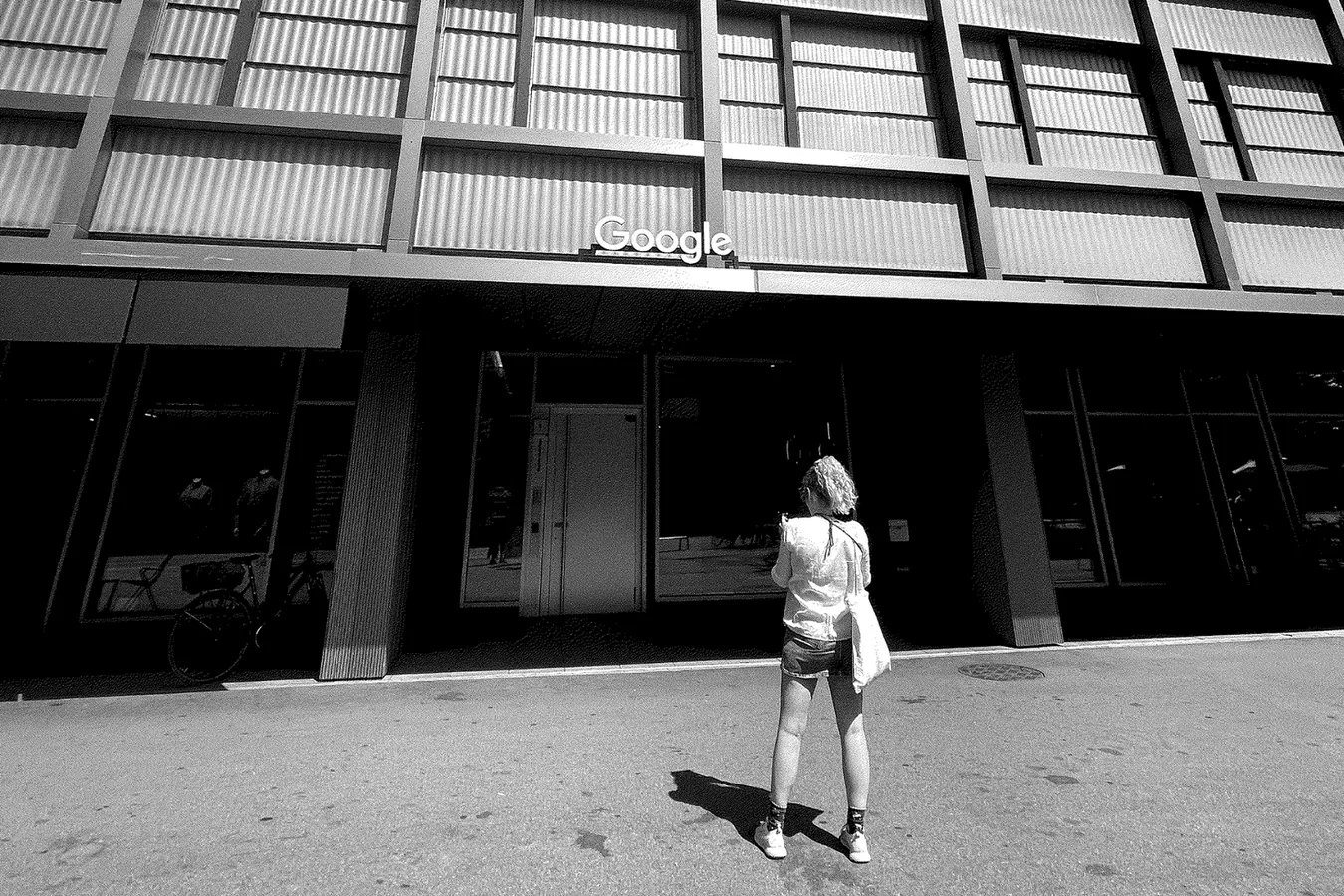
Me performing a photogrammetric scan outside Google's Zurich campus at Europaallee, where the CLOUD manhole cover is located.
Virtual rendering of a photogrammetric scan used to build one of the six augmented reality worlds.
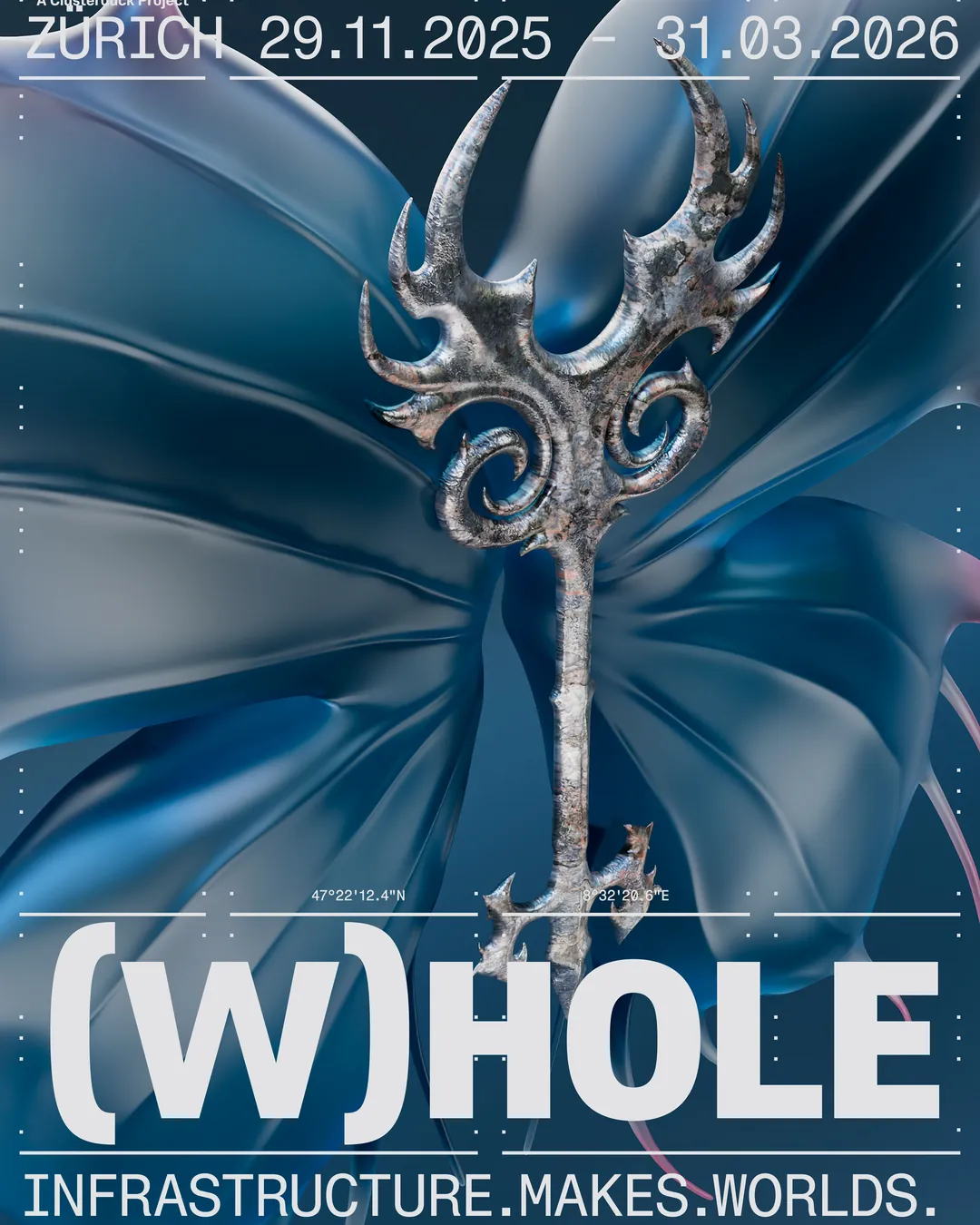
One of six posters inviting Zurich residents to delve deeper into the hidden systems governing their public infrastructures, featuring the symbolic digital sculpture representing ADDRESS.
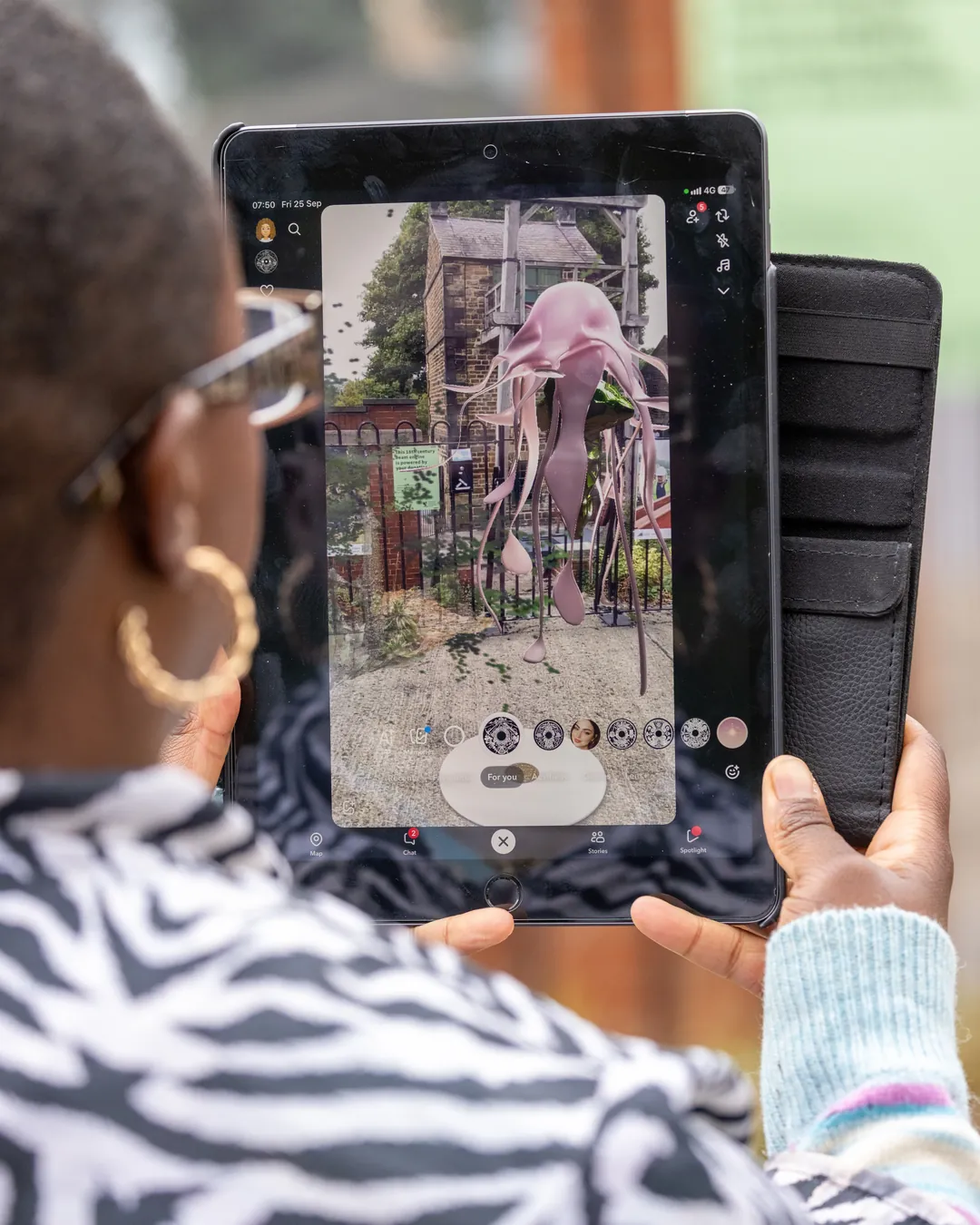
One of the symbolic digital sculptures appearing in augmented reality in the streets of Barnsley. (W)HOLE, Clusterduck for AND Festival 2026. Photo: Chris Foster.
Polyurethane resin version of the manhole cover, exhibited at AND Festival, Barnsley. The manholes are designed to travel from city to city, in either their original brass version or a lighter, white polyurethane resin edition. (W)HOLE, Clusterduck for AND Festival 2026. Photo: Chris Foster.
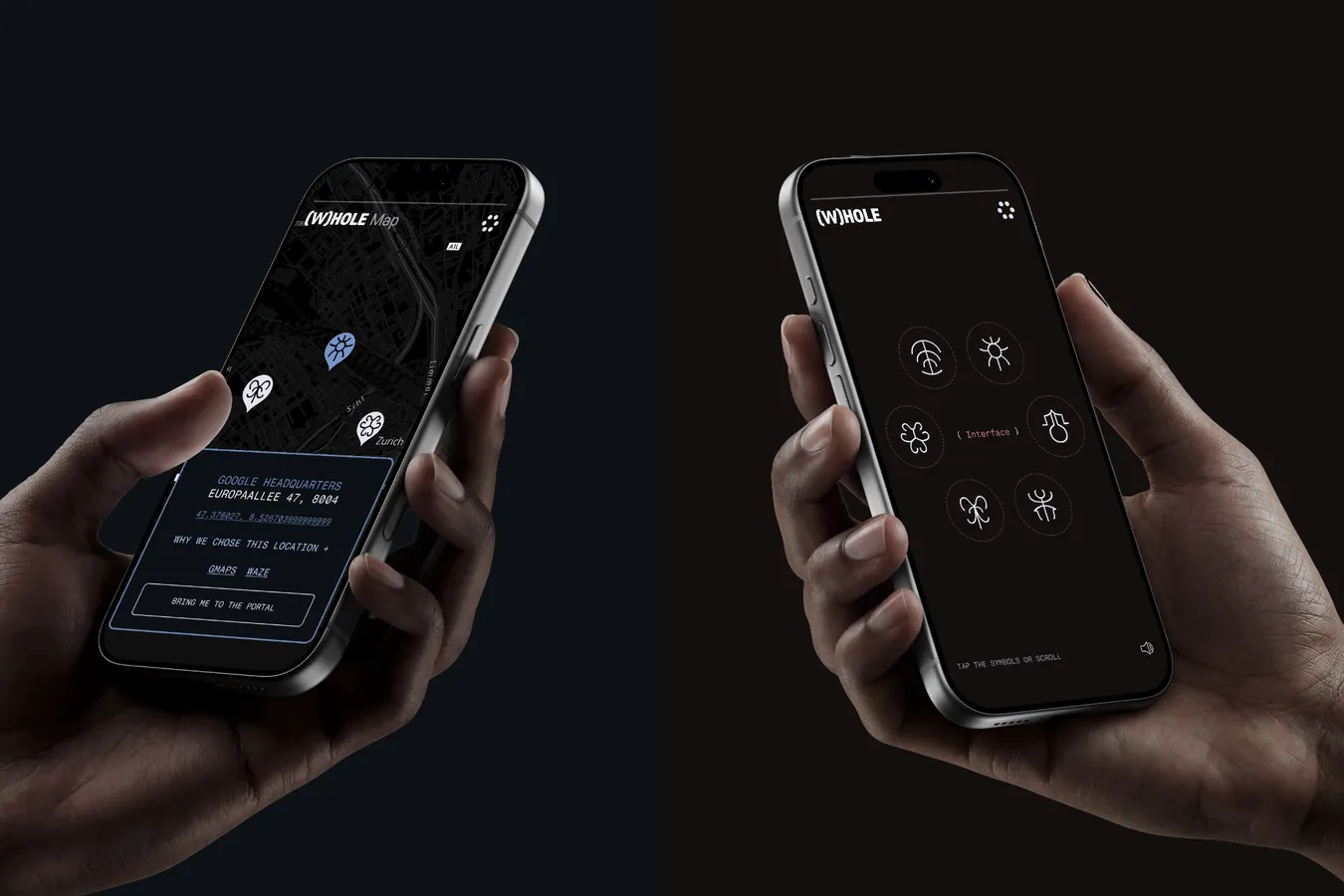
The project website, featuring an interactive map, a digital atlas and a collaborative repository. Explore it at thewhole.website.

Exhibitions

  • The (W)HOLE Project, Kunst im öffentlichen Raum (KiöR), Zurich, 2025–2026.
  • (W)HOLE, AND Festival, Barnsley, 2026.
  • (W)HOLE, Forward Festival, Haus der Kulturen der Welt, Berlin, 2025.

Press

Credits

  • (W)HOLE was conceived and developed by Clusterduck’s co-founders Tommaso Cappelletti, Silvia Dal Dosso, Francesca Delbono, Arianna Magrini and Noel Nicolaus, who worked collaboratively across concept development, art direction, brand identity, copywriting, editing, production, project coordination, UX design and content curation.
  • Björn Alfers, Project Management.
  • Franz Alferz, On-site AR Support.
  • Cristina Bleuler, Location Scouting.
  • Gaia Cionnini, Jewellery Development.
  • Jules Durand, Symbol Design and Typography Consultancy.
  • Gabriele Guarisco, 3D Modelling.
  • Gregorio Magini, Web Development Support.
  • Art Foundry St. Gallen, Manhole Production.
  • Nicolas Paries, Frontend Development and Web Implementation.
  • Pietro Parisi, 3D World Building and AR Integration.
  • Violet Forest, Snap AR Lens Development.
  • Vlad Storm, AR Integration and Consultancy.
  • Miro Tiebe, Manhole Design and Project Illustrations.
  • Beatrice Zito, On-site AR Support.
  • Matteo Zoppi, Sound Design and Composition.
  • Peter Baracca, Photography, courtesy of Kiör.

← All projects

(W)HOLE. Infrastructure make worlds is a public artwork by Clusterduck exploring the hidden world of digital infrastructures. Developed for the art in the public space program of the city of Zurich, it takes the form of a journey across six brass manhole covers, each opening a gateway into an augmented reality world.

Earth, Cloud, City, Address, Interface and User are the six realms through which the project explores the systems shaping our digital lives, looking at both their extractive logic and their potential for cooperation.

Combining sculpture, photogrammetry, 3D design, video and AR, the project invites citizens to explore parallel realities, decode symbolic allegories and contribute their own stories, ideas and tools to a collective online archive.

(W)HOLE

(W)HOLE. Infrastructure make worlds is a public artwork by Clusterduck exploring the hidden world of digital infrastructures. Developed for the art in the public space program of the city of Zurich, it takes the form of a journey across six brass manhole covers, each opening a gateway into an augmented reality world.

Earth, Cloud, City, Address, Interface and User are the six realms through which the project explores the systems shaping our digital lives, looking at both their extractive logic and their potential for cooperation.

Combining sculpture, photogrammetry, 3D design, video and AR, the project invites citizens to explore parallel realities, decode symbolic allegories and contribute their own stories, ideas and tools to a collective online archive.

Oxidised brass manhole cover, engraved with an allegorical representation. On one side, courtesy of KiöR. The digital atlas offers further insight into the ideas behind these symbolic representations:“The internet might seem like a public space, but the protocols that structure it are decided by a handful of institutions and individuals, with no regard for transparency or accountability. Meanwhile, individuals and grassroots organisations keep fighting for their right to privacy and anonymity, despite increasing opposition from governments and private companies.”
Oxidised brass manhole cover, engraved with an allegorical representation. On one side, courtesy of KiöR. The digital atlas offers further insight into the ideas behind these symbolic representations:

“The internet might seem like a public space, but the protocols that structure it are decided by a handful of institutions and individuals, with no regard for transparency or accountability. Meanwhile, individuals and grassroots organisations keep fighting for their right to privacy and anonymity, despite increasing opposition from governments and private companies.”
USER, the brass manhole cover located at Helvetiaplatz, at the heart of Zurich's nightlife. Each manhole cover is placed in a location that connects to the realm it represents. Courtesy of Kiör.
INTERFACE, the brass manhole cover at Polyterrasse, overlooking ETH Zurich, where many of the technologies behind our digital interfaces are studied and developed. Courtesy of Kiör.
ADDRESS, freshly polished brass manhole cover, Paradeplatz, the city's financial hub. Each cover features a QR code that opens a gateway into its own augmented reality world. Courtesy of Kiör.
CITY, detail, Lindenhof, one of Zurich's oldest and most central public squares. The allegorical symbols featured on the manhole covers are decoded and explained on the project website. Courtesy of Kiör.
One of the six augmented reality worlds, dedicated to ADDRESS: the realm that determines who can be found, identified or excluded, and defines the invisible pathways governing digital infrastructures. Each world is built as a patchwork of photogrammetric scans of objects and places around the city, combined with a digital sculpture.
Me performing a photogrammetric scan outside Google's Zurich campus at Europaallee, where the CLOUD manhole cover is located.
Virtual rendering of a photogrammetric scan used to build one of the six augmented reality worlds.
One of six posters inviting Zurich residents to delve deeper into the hidden systems governing their public infrastructures, featuring the symbolic digital sculpture representing ADDRESS.
One of the symbolic digital sculptures appearing in augmented reality in the streets of Barnsley. (W)HOLE, Clusterduck for AND Festival 2026. Photo: Chris Foster.
Polyurethane resin version of the manhole cover, exhibited at AND Festival, Barnsley. The manholes are designed to travel from city to city, in either their original brass version or a lighter, white polyurethane resin edition. (W)HOLE, Clusterduck for AND Festival 2026. Photo: Chris Foster.
The project website, featuring an interactive map, a digital atlas and a collaborative repository. Explore it at thewhole.website.

Exhibitions

  • The (W)HOLE Project, Kunst im öffentlichen Raum (KiöR), Zurich, 2025–2026.
  • (W)HOLE, AND Festival, Barnsley, 2026.
  • (W)HOLE, Forward Festival, Haus der Kulturen der Welt, Berlin, 2025.

Press

Credits

  • (W)HOLE was conceived and developed by Clusterduck’s co-founders Tommaso Cappelletti, Silvia Dal Dosso, Francesca Delbono, Arianna Magrini and Noel Nicolaus, who worked collaboratively across concept development, art direction, brand identity, copywriting, editing, production, project coordination, UX design and content curation.
  • Björn Alfers, Project Management.
  • Franz Alferz, On-site AR Support.
  • Cristina Bleuler, Location Scouting.
  • Gaia Cionnini, Jewellery Development.
  • Jules Durand, Symbol Design and Typography Consultancy.
  • Gabriele Guarisco, 3D Modelling.
  • Gregorio Magini, Web Development Support.
  • Art Foundry St. Gallen, Manhole Production.
  • Nicolas Paries, Frontend Development and Web Implementation.
  • Pietro Parisi, 3D World Building and AR Integration.
  • Violet Forest, Snap AR Lens Development.
  • Vlad Storm, AR Integration and Consultancy.
  • Miro Tiebe, Manhole Design and Project Illustrations.
  • Beatrice Zito, On-site AR Support.
  • Matteo Zoppi, Sound Design and Composition.
  • Peter Baracca, Photography, courtesy of Kiör.

← All projects